
In this tutorial I’ll teach you what to do to make thin paint to use sprayers to ensure that you don’t ruin the paint and then regret the mistake.
Regret won’t reverse the wronged things. If you’re a novice do not miss any aspect covered in this article.
I’ve come across some top paint thinners. The first one I have found to be very excellent was Sunnyside Paint Thinner. The second most effective painting thinner that sprayers can use is Sunnyside 70532. These paint thinners were excellent for thinning paint for sprayers.
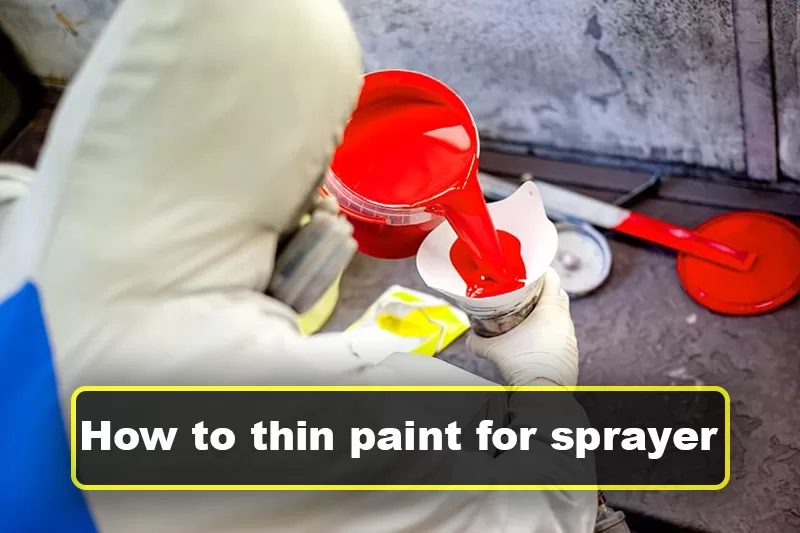
The higher the quality of the paint thinner the better it’ll perform and give an excellent experience. What can make painting more easy? A successful painting job begins with a perfect prep.
The painting must be clean and have a smooth finish with no brush marks visible or spilling dirty edges.
Line strokes must be clear so that they don’t blur if you must repaint an area later because of a poor surface.
Paint is an essential component of any home improvement or construction project. I will go over the entire method to dilute the paint to be used by the sprayer.
This article is about the subject of How to Thin Paint for Spray Gun.
How do I thin paint to sprayer?
How do I thin oil-based paints to use HVLP? HVLP Sprayer for paint?
To thin oil-based paints to use with the HVLP paint sprayer mix the paint with an abrasive such for mineral spirits and Turpentine. This article will help you learn how to thin Paint for a Paint Spray Gun.
It is necessary to experiment with the proportion of paint to thinner but a good place to start will be two parts paint to one part thinner.
After you’ve mixed the thinner and paint to test the consistency, you can check the consistency of the mixture by running it through the sprayer.
When the coating is not thick enough it won’t disperse properly and produce an unbalanced spray pattern. Check out my blog article on the Can You Use Latex Paint On Metal? subject.
When the paint’s consistency is not right, the sprayer may flow out of the sprayer way too quickly. You can adjust the proportion of paint to thinner until you get the ideal level of consistency that is suitable for your HVLP paint sprayer.
How do you make oil-based paint thinner for LVLP paint sprayer
To thin oil-based paints to use an LVLP sprayer, you’ll need to use a thinner, such as mineral spirits, or even turpentine.
If you’re considering thin oil-based paint to use with an LVLP paint sprayer There are a few steps you’ll need to take care of. In the beginning, you’ll need to apply a thinner the paint and mix thoroughly.
After that, gradually add thinner until the paint has reached that desired level of consistency. Be cautious not to add too much since this can result in the paint becoming too thin and fluid.
Then make sure to give the paint thorough mix before you use it with the LVLP paint sprayer.
How do you apply a thin coating of oil-based paint to an airless sprayer for paint?
The method of thinning oil-based paints for use with an airless paint sprayer is easy. In the beginning, you’ll need to fill the desired amount paint into the container in a clean manner.
After that, add the right amounts of paint thinner, and stir it well. When the paint has been thinned, put it in the sprayer, and start spraying.
How do I thin oil-based paints to use Compressed Air Sprayers
To thin oil-based paints for use in a compressor air sprayer, begin mixing paint in the help of a thinner, like mineral spirits.
Add another thinner till the paint has reached an consistency that resembles heavy cream. When the paint has been thinned, you can test it with the sprayer to verify that it’s functioning properly.
If the paint is too thick, you can add thinner until you get the consistency you want.
How do I make latex paint thin for the HVLP spray gun
There are several ways to make latex paint thinner for use with the HVLP sprayer.
A popular option is to utilize a latex paint thinner that is a particular kind of solvent that is specifically designed to thin latex paint.
Water can also be used for thinning latex paint but this may affect the paint’s color as well as final appearance.
In the event that you’re using water for thinning your paint you’ll require more water than in the case of an oil-based paint thinner.
How do you make latex paint thinner for LVLP sprayer
The process of making thin latex paint to be used in the LVLP paint sprayer is easy. The first step is to add the amount you want to the bucket of paint.
Then, slowly pour the latex into your LVLP paint sprayer and stir the contents of the paint bucket using the help of a stir stick.
Third, when the paint bucket has been empty Third, switch off the LVLP paint sprayer, and begin spraying the surface you want to paint.
Fourth, after you’ve finished Fourth, after cleaning The LVLP paint sprayer following the instructions provided by the manufacturer.
How do you thin latex paint to use an airless sprayer
The procedure for thinning latex paint to use the airless paint sprayer is mixing the paint with water at an amount of 1:1. After that you should add the latex paint thinner into the mix and stir it thoroughly.
After that, pour the mix onto the paint sprayer, and start spraying.
How do I make latex paint thinner for Compressed Air Sprayers
To thin the latex paint used in compressed air Air Sprayers, you will have to add an additional thinner to the paint.
Amount of the thinner you use will be contingent on the kind of paint you’re applying and the consistency you want to achieve.
Additionally, you will need to thoroughly stir the paint so that it is distributed evenly. When the paint is thinned, you are able to transfer it to the air-less Compressed Air Sprayer to begin spraying.
How do you paint enamel thinly for an HVLP sprayer
To thin the enamel paint for the HVLP sprayer, you’ll require an agent that thins the paint. The most commonly used thinner used in enamel paint is mineral spirit.
To include the thinning agent start by pouring a tiny quantity of the paint in the container. Then you can add mineral spirits, and stir until the two substances are mixed.
The quantity of mineral spirits you require will be contingent on the kind of paint you’re applying and the consistency you’re looking for.
After adding the thinner and tested the paint, try spraying it on the cardboard or paper. If it’s too thin, you can add more mineral spirits, and then test it again.
Continue adding thinner agent until the paint has the consistency you want.
How do you thin enamel paint to use with an LVLP sprayer
The method of thinning coat with enamel in the LVLP sprayer is essential to attain the desired level of consistency in the paint.
The paint must be thinned until it has like milk, but remaining opace. This is accomplished making use of a paint thinner or through the addition of water into the paint.
After the paint has been thinned, the paint can be put into the LVLP sprayer, and then sprayed on the surface.
How do I apply thin paint to an airless sprayer
To thin the enamel paint for the airless sprayer mix the paint using a thinner in 1:1. Add a tiny amount of distilled water into the mixture and mix it thoroughly.
Next, check the quality that the spray has by running it over an airless sprayer.
In the event that your paint becomes too thin you can add more thinner to the mix and mix until desired consistency is reached.
How do you thin paint enamel to use Compressed Air Sprayers
To thin the enamel paint to use in an air-sprayer that is compressed begin by adding a tiny amount of thinner to paint and mixing it thoroughly.
Then, slowly add thinner until you reach that desired level of consistency. When the paint has been thinned, the paint is ready to be spray.
How do I thin paint based on water for HVLP sprayers
To thin water-based paints to use with an HVLP sprayer, begin using 2-3 ounces water per gallon. Mix the paint thoroughly before testing it on a scrap of paper or on a piece of cardboard.
If the paint is too thick, you can add more water until the paint reaches an appropriate consistency. Make sure to thoroughly mix the paint following each water addition.
When you’ve got the perfect consistency and consistency, your paint is prepared for a smooth, uniform application.
How do you reduce the thickness of water-based paints to use an airless sprayer
If you’re thinking of using an airless sprayer for applying water-based paint you’ll have to thin it first. In the absence of this, the paint will become too dense and block the sprayer.
To thin the water-based paint begin by adding a tiny portion of the water, and then stirring it vigorously.
If the paint remains excessively thick, you can add more water, and stir it again. Repeat this process until paint has the proper consistency for the sprayer you are using.
When the paint has thinned, it can be poured into the sprayer, and you’re ready to begin painting!
How do I thin paint that is water-based to make it suitable for Compressed Air Sprayers
There are several methods to thin water-based paints to use in a compressed-air sprayer. One method can be to include a thinner into the paint.
This will aid in thinning the paint to ensure that it is easily applied by the compressor. Another method to thin water-based paint is adding liquid water in the painting.
This helps make the paint less thick as well as easier to apply. In addition, you may make use of a low-pressure setting in the compressor in order to in reducing the thickness of the paint.
A Few Tips for Thin Paint is used for sprayers
What is the best time to make your Paint Sprayer thin enough?
One method of determining whether your paint is thin or not, is to employ a viscosity mug.
It is included with any good quality spray system and will help you determine for any problems that may be caused by mildewing or inconsistency in the pattern of spraying.
Place some on one side to ensure that about half an inch is left in front of you before pouring it out onto a paper towel to be used for further testing;
Be sure to repeat this process continues, slowly pulling back the trigger until the desired uniformity is achieved.
It is evident how smooth and even the flow results from proper viscosity.
When the Paint is too Thin
Water that is thinner is superior to any water even. When you are trying to thin your paint, begin by adding one cup, and then mixing it well enough the next time you pour in more,, it won’t run out of the bucket as it did before (when there was excessive).
If this method doesn’t work in any way, then you can try it again, using less until you reach a suitable consistency. Then pour it smooth and evenly through both funnels. This generally takes about four cups for larger areas like walls!
Latex paint vs oil-based paint
“Which paint type should I pick?” The question sounds easy, but it’s actually not. The right choice of paint will be a major factor in how long your project can last and what you have to take to keep it in good condition.
The oil-based paints tend to be thicker than latex paints. As a result, they’re ideal for projects outdoors, such as decks or fences that are exposed to the sun and rain all year round.
Paints that are made of latex dry more quicker than oil-based paints therefore they are better suited for smaller projects such as painting a wall accent or even retouching furniture.
Here’s the complete step-by-step guide to How to Thin Latex Paint for Sprayer
Tips on applying oil-based paints
If you’re planning to paint furniture or any other item it is essential to understand how to apply oil-based paint. There’s really nothing complicated about it!
All you require is some tips and tricks to use oil-based paint. Check out these tips from a professional in the area in the field of management for labor.
- Make sure to wash your hands prior to applying any kind of paint to ensure that your surface remains free of dirt and slippy.
- While spraying, be sure to stand about 10 to 15 feet from the object being painted to prevent spraying onto the walls or other surfaces in the area of work.
- Use gloves when working with spray paint cans as the chemicals could cause irritation should they come in contact with eyes and skin.
How to Thin Latex Paint For a Spray Gun
You can utilize an airless gun, or an aerosol can to spray paint with latex paint. However, you might find that the paint may be too dense and requires thinner.
Here’s how to reduce the latex’s consistency, so it can work better with the spray gun! Materials required:
- Five-gallon (18.9-liter) bucket, or something similar
- Water and Funnel
Here’s how:
- Paint the bucket.
- Mix 1/2 cup water to every gallon of paint and mix well.
- When you paint a wall ensure that the paint is not too thick by passing it through a funnel that is empty.
If you notice an increase in separation or your funnel gets clogged at the halfway mark Add another one-quarter cup of water for each gallon (3.8 Liters) to mix it until you’re satisfied by the mixture’s consistency.
As if using just one type would be too thick for what you’re trying to do in this project because some may require thinner than others depending on their surface materiality/conditioning;
If not, continue reading. This is the complete guide for How to Thin Latex Paint using a Spray Gun.
How to thin paint in HVLP (High Volume low Pressure) Paint Gun
To thin the paint to fit the HVLP gun, combine 10% of water into the usual spray-can mix.
If it’s not enough after mixing the mixture this way, add additional fluid until you have the consistency that allows it to flow effortlessly from the canister to the tank or into the air delivery system, without blocking its edges (this can take anywhere between 5 and 15 percent).
Be careful not to overdo it as in the event that there’s not enough oxygen present during the spraying process, then the residue left on the surface will be as hard as rock!
How to thin paint on an airless spray guns
Clean up any lacquer that has been used from the container or bottle to ensure that you start with new materials and making sure that you do not add anything to your work surface.
Add more accelerators (instructions will indicate the exact amount) until the accelerator is all mixed up prior to loading it into any kind of gun described above.
This guarantees even coverage over the entire surface being provided by any device utilized!
If there’s not already some type of equality created at the beginning your paint may be splattered with streaks, lines, or any other designs that are better avoided.
Other tips to consider prior to deciding which gun to get are:
As we’ve mentioned before, if you are using a smaller spray gun, it’s essential to be mindful not to fill it at least 80 percent full, since this leaves space so that the spray can move when you spray.
If you’re using a larger model it’s important to note not to use too much of the paint as it may result in the pressure of air flowing through it to rise until the paint has to be pushed to exit the gun too early.
The spray can be damaged by the spray can cause a major mess, in the majority of cases. Keep this in mind and don’t fill the hopper higher than halfway to stop the possibility of this happening.
In the end, it’s essential to ensure proper ventilation and protection based the environment you’re painting in!
Airless spray guns emit gaseous emissions, and leave residue behind, so wearing a protective mask is strongly suggested.
If you’re working inside it is recommended to open your windows for at around an hour before you begin painting, and if working outdoors, you’ll need be wearing a cap, or any other head protection.
How do you thin water-based paint
To create a thinner-than-air sprayable paint using water-based paint take these steps:
- Mix the amount you want to use of thinner in a container using 1 gallon of water. Then put the amount you need in the container.
- Shake vigorously for 10 seconds.
- Spray the surface.
- Five minutes should be allowed before painting to let the moisture evaporate off the coatings.
What is the reason you have to make a thin layer of paint for the sprayer?
You may be asking yourself why you require thin paint for your sprayer. There are a variety of reasons among them:
The viscosity influences the flow of the nozzle as well as how it bonds to the surface. A thinner paint will assist in this.
You can have greater control over the spray’s form through the addition of water or thinner to the mix.
That means that when you spray a wall you’ll be able to get into corners without moving around much since it’s easier to target and continue in the same direction.
This is also helpful when painting windows and doors because they’re filled with small elements that are difficult or impossible to paint. Also, you’ll save time cleaning up after the project by not having paint get into the crevices.
The solids in the paint could cause issues in the event that you’re using sprayers. When you add solvent thinner into your paint you’ll be able to ensure it maintains a constant viscosity, as well as being free from particles or lumps.
A thinner can also remove air from the mixture, so it can be dispersed to cover a greater area.
These are the principal motives for thinning, and at base, the reason to write this thorough guide on diluting the paint used by the sprayer.
Conclusion on how to make paint thinner for sprayer
Spraying paint with a painter is quicker and simpler than painting using a brush or roller, as you are able to easily adjust the paint mixture to suit your preferences.
The manufacturer of each ingredient will offer their own guidelines on the amount of each ingredient must be employed to result in a positive solution.
Before you begin this process, ensure that all ingredients are mixed in accordance with what’s written on their (mixture).
After everything is prepared, make sure to write down the instructions so that when we return after we have completed one project we know precisely how many cups/ounces and so on.
It is a great tool to use, which can save time when spraying projects that need to be re-sprayed. This article about How to Thin Paint for Spray Gun would have helped you to thin the process I’m certain.
Cleansing the sprayers will prevent your paint from being sprayed across the room and creating the environment cluttered. Make sure to wash the rest of your surfaces too.
Best of luck on whatever project you’re doing!