
If you’re painting a wall or refinishing a piece of furniture, you’re bound to have to make an uneasy decision. In the end, there are a variety of finishes to pick from, and choosing which one will win in the satin or. the glossy debate can be an easy task.
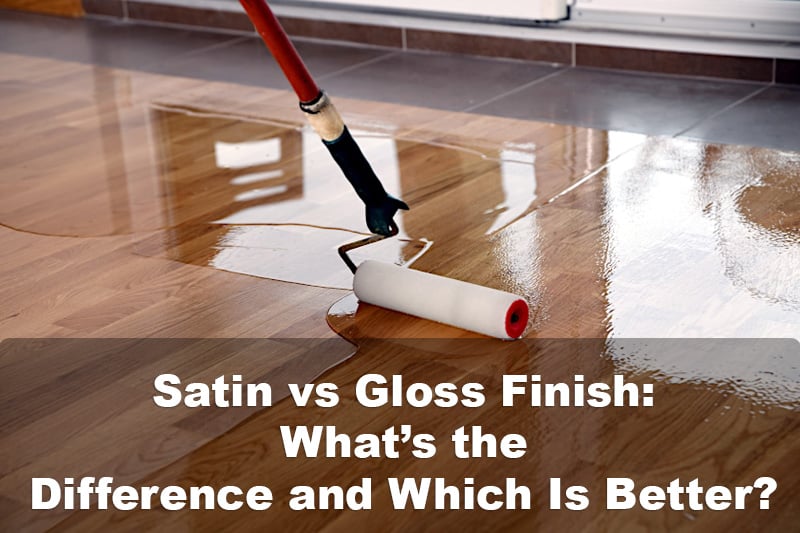
[su_note note_color=”#f6f6c1″ radius=”1″]There is a major difference between a gloss and satin finish in terms of shine. Gloss is more reflective and satin tends to be more matte, yet there is still a little shine. But there are other aspects to take into consideration in terms of durability as well as the ability to conceal imperfections on surfaces.[/su_note]
Both gloss and satin finishes are popular, and they’re both suitable in specific situations. You’ll likely also find other alternatives, such as semi-gloss finishes that are in between. This could make the decision this much more difficult.
Next Related: Satin Vs. Semi-Gloss Kitchen Cabinets: Which Is Better?
If you know what each choice can offer and when which one is the best option to choose, you’ll be able to select the most appropriate option to finish your work. If you’re thinking about satin or. If you’re wondering how to tell what is the best option for a given situation, here are the facts you should know.
What Is a Satin Finish?
Just the slightest amount of sheen is imparted by a satin finish. It’s not totally matte, but it does reflect light slightly but it’s not a highly reflective surface, either. In most cases, the light bounces off the surface and isn’t visible if you can even see it even.
The number of binders typically determines the paint’s sheen. When paints are less reflective the ratio of binder in the paint is smaller.
Types of Satin Finish Products
There are a variety of products with satin finishes, which allows you to use this method for a range of repainting and refinishing projects. Each product has its own distinct purpose or is best used in certain situations.
Paint, for instance, is the most popular way to add color and finishing. However sealing agents and clear coatings typically don’t alter the base hue of the wood, wall, painted or stained surfaces however, they may modify the appearance of the surface.
In general, you will discover the following things:
- Satin finish paint
- Clearcoat with satin finish
- Satin-finish spray paint
- Satin finish staining
- Satin finish varnishes
- Satin sealants for finish
- Furniture wax with a satin finish
The Benefits of a Satin Finish
If you choose a satin finish is typically an extremely smooth surface. It isn’t usually characterized by a sticky feel. Instead, you are able to slide your hand across it.
Also, the satin finish products are typically long-lasting. In general, they stand against wear and tear better than other materials. Additionally, it’s possible to remove dirt (using mild cleaners) without damaging the surface.
Another benefit of satin surfaces is their capability to cover up imperfections. Because it does not reflect light as much small dings and scratches appear less obvious. But it doesn’t fully conceal them; it’s more effective than glossier alternatives.
Additionally, satin finishes could give a more precise color than glossy finishes. They aren’t as reflective of light, which reduces the chance that the lighting color can alter the appearance of the paint in a significant way.
The Drawbacks of a Satin Finish
Satin finishes won’t fully cover up imperfections, and particularly scratches. It can also be difficult to touch up. If you apply more paint to an area or two, those spots will usually stand out visually instead of seamlessly merging.
In addition, although some satin-finish products are strong, however, they satin finish products aren’t as water- or stain-resistant as other options. However, this doesn’t mean they don’t offer protection but they aren’t as durable as the products you will get from other.
It is possible to get into issues when you apply coats of satin paint inconsistently. Beginners might not be able to distinguish between the two, which is why it might not be the best finishing option.
Best Places to Use Satin Paint
Generally, satin paint (and other and other) (and other satin finishes) are ideal for areas with high traffic, high-touch surfaces, and for large areas. It’s an extremely popular option for living spaces and master bedrooms as reflective paint can be to be too overwhelming in those spaces.
Satin paints and finishes are great for rooms with children. This finish is long-lasting and can withstand regular cleaning, which is essential in children’s rooms.
In addition to kitchens and hallways, satin paint is ideal for these areas as well. They are a place that is prone to high traffic. There’s a higher likelihood of surfaces getting filthy (and needing to be cleaned) or being touched often which makes a long-lasting finish the most suitable option.
What Is a Semi-Gloss Finish?
Semi-gloss finishes have some sheen than satin. It’s not particularly reflective, although light does catch off its surface in a way that it’s noticeable. But, it’s not too distracting or overwhelming even when it’s employed to cover a large surface.
Types of Semi-Gloss Finish Products
A variety of items provide semi-gloss finishes. You can typically get the following products:
- Semi-gloss finish paint
- Semi-gloss clear coat
- Semi-gloss finish spray paint
- Semi-gloss finish stain
- Semi-gloss finish varnishes
- Semi-gloss finish sealants
- Semi-gloss furniture wax that finishes
The Benefits of a Semi-Gloss Finish
Semi-gloss finishes tend to be extremely durable and will be able to withstand some serious scratching. It also has moisture resistance and is ideal for areas that are humid within the home.
By applying semi-gloss wall paint you are able to visually enhance your space. Throughout the space, light bounces off it due to its reflective properties. While this can be quite overwhelming in a bright, spacious space, it can be a great option in smaller rooms with limited lighting.
The Drawbacks of a Semi-Gloss Finish
Semi-gloss paints can show imperfections rather than conceal imperfections. For instance, if you are able to see a scratch in your wall the reflective finish lets the light to reflect off of the edges of the dent and make it visible in many instances.
When you use a semi-gloss finish, and it streaks, this could be an issue. It could cause the sheen to be uneven, which makes the uneven application be noticed.
Best Places to Use Semi-Gloss Paint
Since semigloss paints are water-resistant and durable, strong enough to withstand scratching – making them ideal for bathrooms and kitchens. Apart from being ideal for walls, Semi-gloss finishes are frequently preferred for furniture with high touches like bookshelves and dressers and cabinets for kitchens and bathrooms.
It is also an excellent option for molding and trimming. With trim, durability and washing-ability is useful. A touch of shine can make the furniture make a statement against wall colors and provide visual interest to areas.
What Is a Gloss Finish?
The gloss finish is one of the most shiny choices around. It provides surfaces with a smooth appearance and reflects a large volume of light.
Types of Gloss Finish Products
Many finishing, refinishing and painting supplies are available with gloss, and include the following:
- Paint with gloss finish
- Clearcoat with gloss finish
- Gloss finish spray paint
- Stains with a gloss finish
- Gloss finish varnishes
- Sealants for gloss finishes
In general, furniture wax can’t be utilized to create an extremely glossy finish. Although it is able to be polished and buffed to create a shine, if you’re looking for a noticeable glossy appearance it’s best to use an alternative gloss finish almost always.
The Benefits of a Gloss Finish
If you choose a gloss finish is typically an extremely durable and cleanable surface. It is often not prone to staining and is water-resistant.
Gloss finishes can brighten spaces significantly. They reflect the greatest amount of light, which allows them to create darker spaces or corners that seem brighter when they are in almost all light sources.
The Drawbacks of a Gloss Finish
In terms of disadvantages, the most difficult thing when it comes to gloss surfaces is the extent to which they highlight imperfections. Even the smallest of imperfections can be seen in glare after the gloss finish has been applied. In the end, you must spend a lot of energy into the preparation of the surface to ensure it’s smooth prior to placing the gloss finish.
High gloss finishes can seem overwhelming in large spaces or in rooms with lots of light. In many cases, covering the entire space with gloss paint can seem overwhelming.
In addition, you might be able to see that gloss paint colors appear to change based to the illumination. Because of the reflective surface the color can be affected by the color of the light, making the hue appear warmer or colder depending on the type of light bulb that you are using, the amount of sunlight is entering and much more.
Best Places to Use Gloss Paint
Since gloss paint is Reflective is a smart idea to apply it in a strategic way.
It is a good option for molding and trim and is suitable on smaller furniture pieces such as end tables.
The most enjoyable use for high gloss paints is to produce subtle patterns. You can, for instance, combine it with a satin paint of the same hue, and then use it to make shiny stripes or designs over the top of a less reflective satin base coat.
Comparing Satin, Semi-Gloss, and Gloss Paint
Sometimes, the best method to determine the right finishes for your needs is to look at your options in a direct manner. This way, you’ll be able to discern where one finish is superior to the other more easily.
The sheen of semi-gloss, satin, and gloss paints is the primary difference between them. each one being shinier than the previous. Although gloss and semi-gloss generally provide greater endurance, satin stands superbly against wear and tear. In the end, if you look over and above the sheen, they are very similar.
With the different of light reflections, every option could be more suited to particular circumstances. Here’s a list of clear comparisons, allowing you to determine how each one stands out.
Satin Vs. Semi-Gloss Paint
Semi-gloss and satin paints are different in regards to the sheen, with semi-gloss appearing somewhat shinier. Semi-gloss paint shades can appear slightly different depending on the lighting conditions in the space. It can, however, provide a depth that is not possible with a more matte finish.
Semi-gloss is an excellent choice for surfaces that are highly tactile such as furniture and cabinets. Furthermore, because it’s durable and water-resistant, it could be used in bathrooms and kitchens. In general, the sheen isn’t too intense that it’s overwhelming, making it an ideal choice if you’re looking to brighten your spaces or highlight your trims subtly.
Most of the time satin paint is the best choice for those who are worried about the appearance of imperfections. It is less reflective and makes the edges of dings and scratches less obvious. It is also better in larger spaces where the shine might cause a lot of noise.
Satin and. Gloss Paint
If you’re considering satin as compared to. glossy paints, it’s coming near two different extremes on the scale of shine. Both look similar, but satin paint appears almost matte and offers only the most delicate sheen, in comparison to the high-shine look of gloss.
This allows both finishes to coexist. Both are durable which means they can be utilized in almost every room. But, satin tends to be less than a wall and offers the most authentic colors since it’s not influenced by reflections of light. It’s a great choice for accent pieces and trims by bouncing light around and drawing attention to interesting features in the room and furniture.
Semi-Gloss vs. Gloss Paint
The main difference between gloss and semi-gloss paint is its sheen. As with satin as opposed to. semi-gloss, semigloss and gloss paints are one step further in terms of luster. The gloss paint is the shiniest, and often the most dramatic however semi-gloss paint still has a shine, but, it’s less dazzling.
Gloss paint is a great choice ideal for molding, trimming and furniture pieces, indicating they’re free of imperfections when they are painted. They will be visually noticeable, which is an ideal design decision.
However, gloss paints are usually not recommended for walls. It is a quick way to become overwhelming even when it is used in the form of a single accent wall. If you are covering a large space it is a preferred option, especially if you want to be able to see a noticeable shimmer.
Satin Vs. Gloss Clear Paint
Satin contrasts. The gloss clear paint is the sparkle. The satin clear paint provides an appearance of velvet with only a tiny bit of sparkle. The glossy clear paint can give a look like lacquer. It’s highly reflective, meaning that light bounces off it more effectively.
Also called a clear coat is often applied over typical colored paint. It provides the surface of the color with a certain amount of protection. This reduces the likelihood of the paint’s color fading over time or become damaged, or cause staining.
Clear paint may alter the appearance of paint. For instance, if your furniture with matte finishes it is possible to alter the appearance by applying clear acrylic. If you select satin clear coats, you’ll get a satin-like finish but without altering the hue of the original. If you apply gloss, you will retain the original color. The gloss will become more shiny.
Clear paints can also be used to alter the look of other materials, in addition to offering an amount of protection. It is possible to apply them directly on wood, plastic or metal according to the specific product. The texture and color will remain, as the clear coating alters the appearance of the item.
Satin Vs. Gloss Polyurethane
Polyurethane is a kind of material that is commonly used for furniture or flooring made of wood. It provides protection by covering the wood and reducing the risk of the damage that occurs over time.
The most important difference between satin and gloss polyurethane is the gloss. Gloss polyurethane has a high reflective appearance and reflects the most amount of light. Satin is a subtle sheen that reflect less light overall. Both are extremely robust and can be employed in areas of heavy traffic or surfaces that have high friction.
Like satin paint, polyurethane is excellent for covering imperfections. If you have hardwood flooring that has seen rough time and you’re looking to cover up imperfections, then satin is likely to be the best alternative. It can also work great for flooring. It can be a little overwhelming in large rooms or have lots of lighting. If you’re using rug-like area rugs or large furniture pieces, flooring made of exposed wood can be a great design element.
Furniture can be largely influenced by the individual’s taste. If you like a glossy appearance rather than a soft one, then choose a satin. If you like things that are less obvious and elegant, satin is the best way to choose.
Satin Vs. Gloss Varnish
Both varnish and polyurethane are similar. Both of them are transparent coatings typically applied to wooden furniture or other surfaces. Polyurethane is usually utilized in indoor settings and there are also exterior outdoors varnishes.
The major distinction between satin and gloss varnish is the sheen. Both offer similar levels of protection and durability , and give the wood resistance to UV and water as well. Satin varnish isn’t a shiny a gloss varnish.
Gloss varnishes and satin varnishes are typically applied to furniture that is used outdoors. It could be chairs, tables or similar pieces. The marine varnish is a favorite for boats, however it’s also an excellent option for furniture.
Many homeowners choose to cover the decks of their homes with varnish, in the hopes that it will protect the deck against ultraviolet-induced harm. However, the right stain can also protect and is generally easier to use.
Paint Sheen Chart
| Satin | Semi-Gloss | Gloss | |
| Bedroom | X | ||
| Living Room | X | ||
| Family Room | X | ||
| Dining Room | X | ||
| Ceiling | X | ||
| Kids’ Room | X | X | |
| Hallway | X | X | |
| Bathroom | X | X | X |
| Kitchen | X | X | X |
| Doors | X | X | X |
| Windows | X | X | X |
| Trim | X | X | X |
| Cabinets | X | X | X |
| Interior Furniture | X | X |
Which Finish Is Best: Satin or Gloss?
If you’re trying to decide, “Satin vs. gloss which one is better?” The answer is something to do with. Each finish has its own advantages and disadvantages, which gives an individual look.
Before you pick a finish, look at the material you’re planning to apply. Are you considering an extensive area that’s identical to the walls or floors in the area? Are you looking for an design element? Are you concerned regarding its durability? How is the lighting inside the area?
If you take a moment to think about these factors and think about these aspects, you will be able to limit your choices. At the end of the day you have to choose the best choice for you above all other considerations. Take into consideration the benefits and disadvantages of each. It is important to take the time to think about the style. Select the style that is most compatible with your preferences and needs. It’s what makes you happy, and that’s what matters.